Get Marketing Insights First
Subscribe to receive actionable strategies, growth tips, and industry insights delivered straight to your inbox.

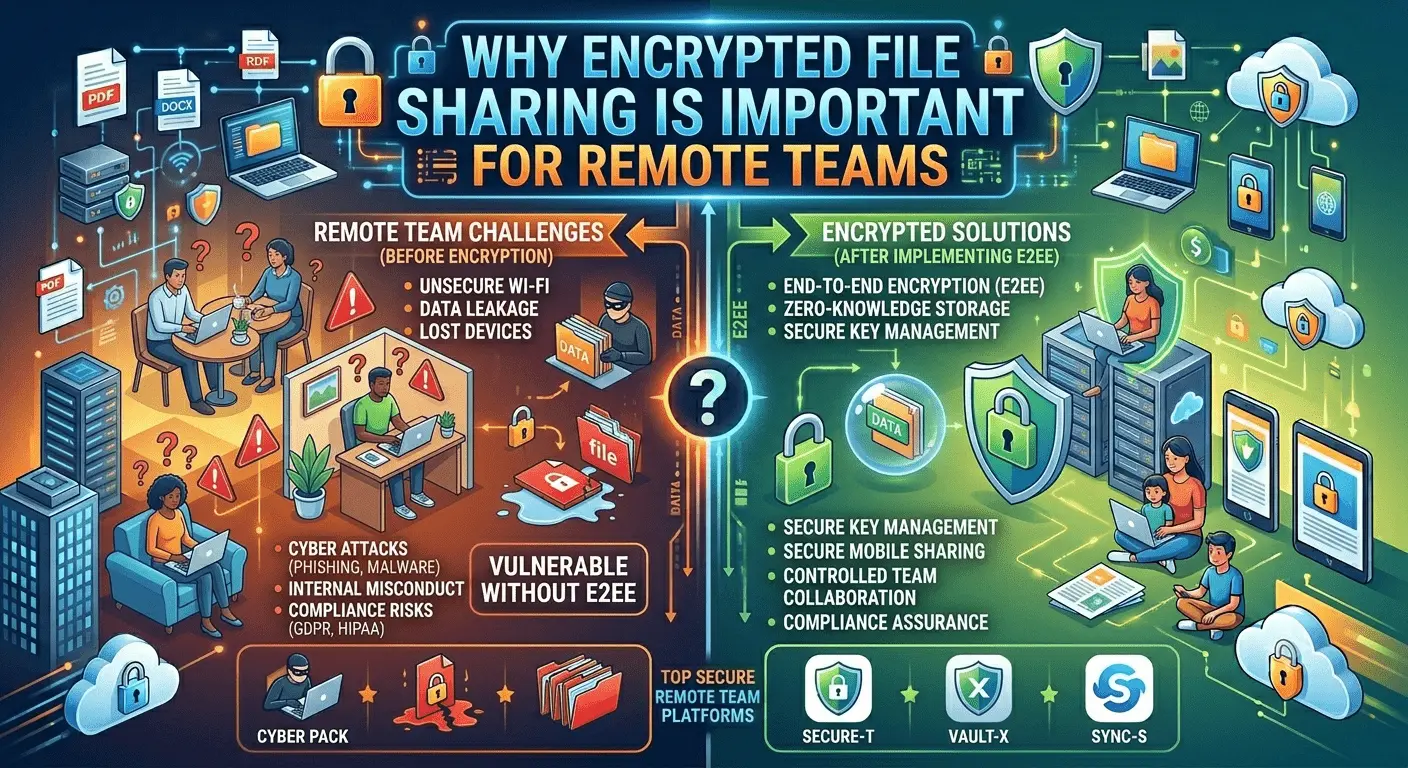
Remote work has transformed how businesses operate, allowing teams to collaborate across cities, countries, and time zones. While this flexibility creates new opportunities, it also introduces security challenges. Employees frequently share contracts, financial reports, customer information, project files, and other sensitive documents through cloud platforms and online collaboration tools.
Without proper protection, these files may become vulnerable to unauthorized access, interception, accidental exposure, or cyberattacks. This is why encrypted file sharing has become an essential component of modern remote work environments.
Encrypted file sharing is the process of protecting files using encryption technologies before, during, and after transfer. Encryption converts data into unreadable code that can only be accessed by authorized users with the appropriate credentials or decryption keys.
Modern file-sharing platforms commonly use encryption while files are being transmitted across networks and while stored on cloud servers, helping reduce the risk of data exposure. Box, for example, encrypts files in transit and at rest using industry-standard encryption technologies.
Remote employees often access company files from home networks, public Wi-Fi connections, personal devices, and multiple locations. These distributed environments increase the number of potential entry points for cyber threats.
Common risks include:
Organizations must implement strong security measures to protect business-critical information regardless of where employees work.
Encryption helps ensure that files remain protected even if they are intercepted during transfer or accessed by unauthorized individuals. Without the proper decryption credentials, encrypted content remains unreadable.
This additional layer of protection significantly reduces the impact of many common cybersecurity threats and helps organizations maintain control over sensitive information.
For organizations managing customer data, financial records, legal documents, or proprietary information, encryption is often considered a foundational security requirement.
While encryption is extremely important, it should be combined with additional security measures such as multi-factor authentication (MFA), strong passwords, user permissions, access monitoring, and employee cybersecurity awareness training.
A layered security approach provides stronger protection than relying on any single technology alone.
Modern collaboration platforms allow administrators to control who can view, edit, download, or share files. Features such as password-protected links, expiration dates, permission levels, and audit logs help organizations maintain visibility and control over shared content.
Box provides granular access controls, encrypted storage, secure sharing links, and administrative controls that help organizations manage file-sharing security.
Remote teams rely heavily on digital communication and document sharing. Secure collaboration platforms allow employees to work together efficiently without sacrificing data protection.
Organizations that implement secure sharing practices often benefit from improved productivity, better compliance management, and reduced cybersecurity risks.
The Google Cloud Storage platform includes encrypted file storage, secure link sharing, access permissions, collaboration controls, audit capabilities, and compliance-focused security features designed to help organizations safely share content across teams and external partners. Box also uses AES-256 encryption and TLS protocols to protect files in transit and at rest.
Organizations seeking stronger cybersecurity should prioritize encrypted file sharing as part of their broader digital collaboration strategy.
Modern remote collaboration tools can help teams work efficiently while maintaining high standards for data protection and privacy.
When combined with strong policies, employee training, and secure infrastructure, encrypted file-sharing solutions become a powerful defense against evolving cyber threats.
As remote and hybrid work models continue to expand, demand for secure collaboration technologies will only increase. Organizations that invest in encryption, access controls, and cloud security today will be better positioned to protect sensitive information in the future.
Encrypted file sharing is no longer optional for remote teams. It is a critical component of modern cybersecurity that helps protect sensitive information, reduce risks, and support secure collaboration across distributed workforces.
By combining encryption with strong access controls and secure cloud platforms, businesses can confidently embrace remote work while maintaining the security and integrity of their data.