Get Marketing Insights First
Subscribe to receive actionable strategies, growth tips, and industry insights delivered straight to your inbox.
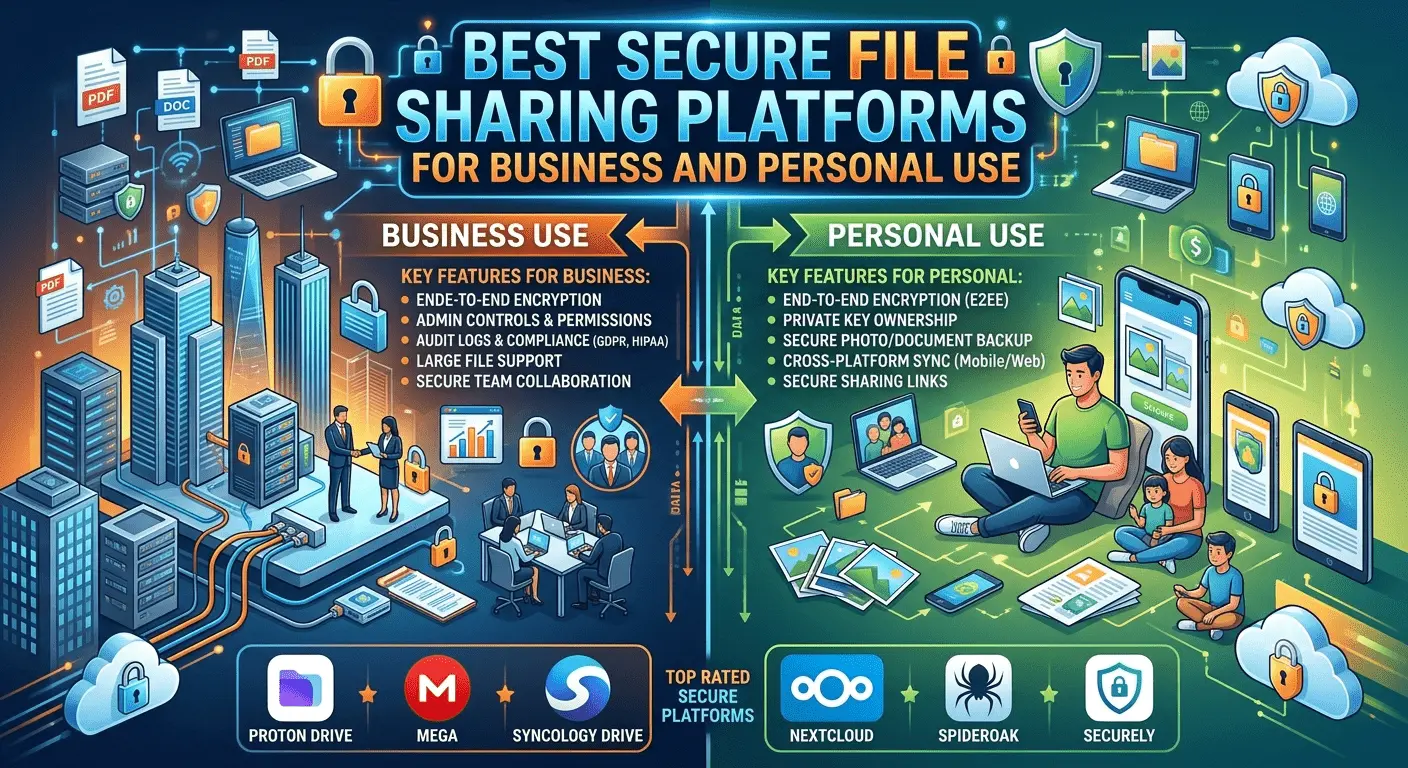
As remote work, digital collaboration, and cloud-based workflows continue to grow, secure file sharing has become an essential requirement for both businesses and individuals. Whether you’re transferring sensitive business documents, collaborating with clients, storing personal files, or managing large media projects, choosing the right file sharing platform can significantly impact security, productivity, and accessibility.
Modern cloud storage providers offer far more than simple file transfers. Today’s platforms include advanced encryption, access controls, collaboration tools, version history, and compliance features designed to protect data while making sharing easier than ever.
Cybersecurity threats continue to evolve, making secure file sharing more important than ever. Sensitive documents can be exposed through weak passwords, unsecured transfers, unauthorized access, and outdated storage practices.
Businesses and individuals increasingly rely on cloud platforms that offer encryption, authentication controls, secure links, and activity monitoring to help safeguard important information.
The best platforms combine strong security with a user-friendly experience that supports productivity and collaboration.
FileSave offers a streamlined solution for users who need reliable cloud-based storage and file sharing capabilities. Designed for both personal and professional use, the platform focuses on accessibility, simplicity, and secure file management.
As organizations continue adopting remote collaboration, platforms that provide dependable secure file sharing platform capabilities are becoming increasingly important.
Dropbox remains one of the most recognized names in file sharing and cloud storage. It offers collaboration tools, file recovery features, device synchronization, and enterprise-grade security options.
Organizations can learn more about security practices through the Dropbox Security Center, which outlines encryption methods, account protection features, and compliance initiatives.
Google Drive is widely used for document collaboration, cloud storage, and team productivity. Integration with Google Workspace makes it particularly useful for organizations that depend on cloud-based document editing and communication.
Its sharing controls and permission management features support both personal and business use cases.
OneDrive integrates closely with Microsoft 365 applications, making it a strong option for businesses already operating within the Microsoft ecosystem.
Features such as file versioning, secure sharing links, and enterprise-level administration tools help organizations manage information effectively.
Box focuses heavily on enterprise collaboration, governance, and security. Many organizations choose Box for document management workflows, compliance requirements, and large-scale team collaboration.
Its advanced security controls make it a popular option among businesses handling sensitive information.
Sync.com is known for privacy-focused cloud storage and secure file sharing features. The platform emphasizes encryption and privacy protection, making it appealing to users who prioritize data security.
Its secure sharing options help protect files while maintaining ease of use.
The ideal platform often depends on how files are used.
Cloud storage technology continues to evolve as organizations demand stronger security, faster access, and better collaboration capabilities. Innovations in encryption, identity verification, artificial intelligence, and data governance are shaping the next generation of file sharing platforms.
Readers interested in upcoming trends can explore cloud file storage solutions that are expected to influence the industry in the coming years.
Data breaches, ransomware attacks, and accidental file exposure continue to affect organizations of all sizes. Implementing strong file sharing security practices helps reduce risks and protect valuable information.
Choosing a platform with robust security features is one of the most important decisions organizations can make when managing digital assets.
The best secure file sharing platform depends on your specific needs, workflow requirements, and security expectations. Whether you’re an individual looking for simple cloud storage or a business managing sensitive information, modern platforms provide a wide range of tools designed to keep files protected and accessible.
By prioritizing security, usability, and collaboration features, users can confidently select a solution that supports both current needs and future growth.