Get Marketing Insights First
Subscribe to receive actionable strategies, growth tips, and industry insights delivered straight to your inbox.

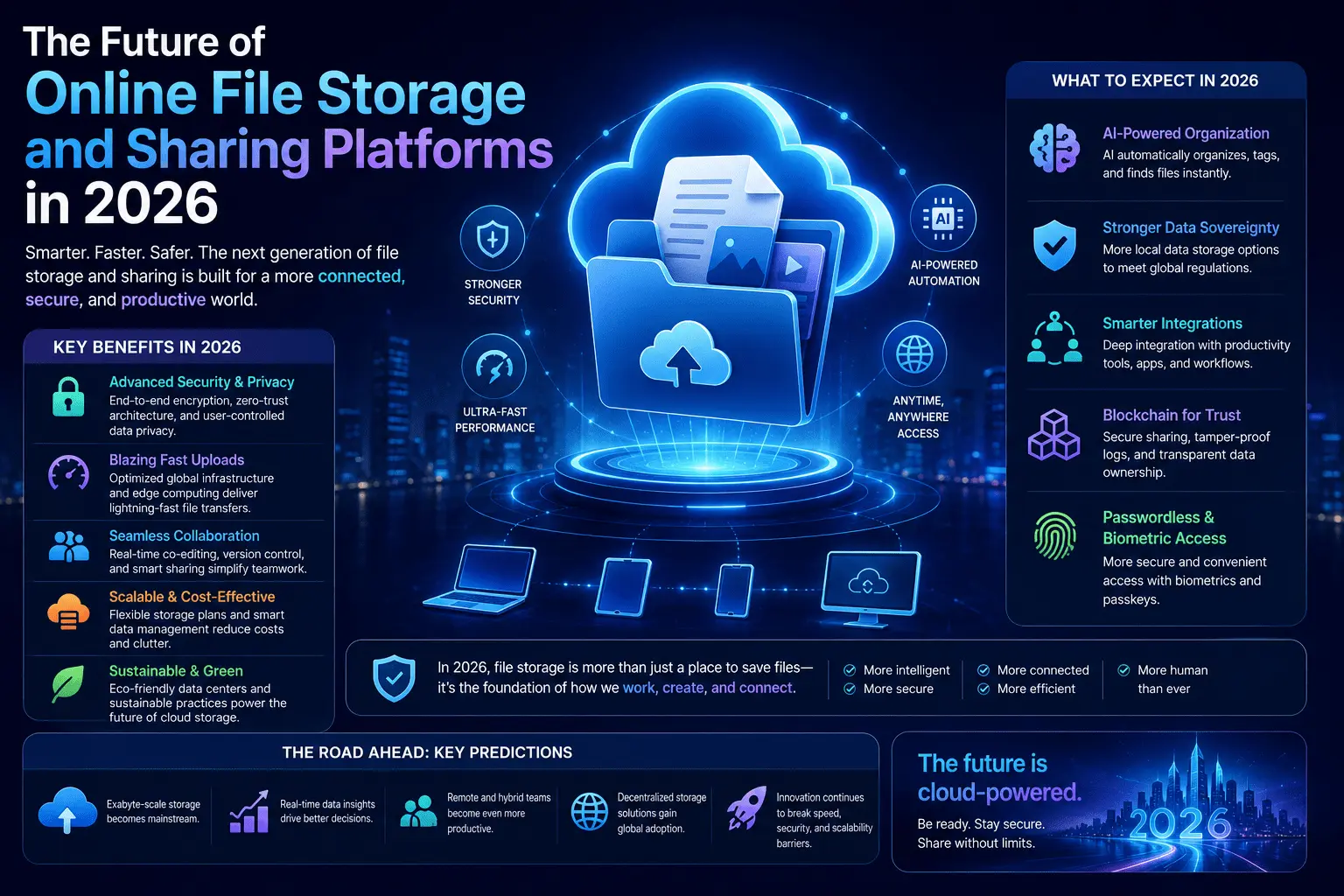
Digital infrastructure continues evolving rapidly, and in 2026, online file storage has become more intelligent, scalable, and integrated than ever before.
Businesses, creators, remote teams, and individual users now depend heavily on cloud systems for daily workflows, collaboration, and long-term data management.
As technology advances, the future of cloud storage is no longer just about storing files online — it’s about smarter automation, AI-powered organization, faster synchronization, and seamless accessibility across devices.
Modern users now expect platforms that combine speed, security, flexibility, and intelligent file management into a single experience.
Cloud systems are no longer optional for modern businesses.
Organizations now rely on online storage platforms for:
This shift has accelerated as hybrid and remote work environments continue expanding worldwide.
Cloud-based systems now support everything from startups to global enterprises.
One of the biggest innovations shaping the industry is AI file management.
Artificial intelligence is helping platforms become smarter by automating tasks that previously required manual organization.
Modern AI-powered systems can assist with:
This helps users locate files faster while improving workflow efficiency.
As internet speeds improve globally, users expect instant access to files without delays.
Modern platforms are investing heavily in:
These technologies help create more reliable smart file sharing experiences across multiple devices and locations.
As cloud adoption increases, data privacy and cybersecurity remain top priorities.
Future-ready platforms are expected to expand support for:
These improvements help users maintain stronger control over shared information while protecting sensitive data online.
The growth of distributed teams has permanently changed how organizations handle data.
Modern businesses now need platforms that support:
Cloud systems designed for collaboration are becoming essential productivity tools for modern digital work environments.
Several major digital storage trends are shaping the future of online file platforms.
AI tools are increasingly embedded into storage platforms to automate organization and improve usability.
Some emerging platforms are exploring distributed infrastructure for better redundancy and privacy.
Search systems are becoming more context-aware and predictive.
Users expect seamless file access across smartphones, tablets, and desktop devices.
Many cloud providers are investing in greener data centers and energy-efficient infrastructure.
Modern users expect file-sharing platforms to adapt to different workflows and industries.
Today’s platforms often support:
This flexibility is driving the growth of more scalable and customizable cloud ecosystems.
Several platforms and resources continue influencing the future of cloud-based storage systems.
Examples include:
These resources help showcase evolving technologies and innovations within the file-sharing industry.
The future of file sharing is becoming more automated, intelligent, and integrated into daily workflows.
Users increasingly want:
Platforms that provide future-ready upload tools will likely remain more competitive as digital demands continue growing.
The future of online storage is moving far beyond basic cloud uploads.
Modern online storage platforms are evolving into intelligent ecosystems powered by automation, AI, and advanced cloud infrastructure.
As businesses and users continue generating larger amounts of digital content, efficient and secure sharing systems will become even more important.
Organizations that adopt smarter cloud storage platforms today will likely benefit from better scalability, collaboration, and productivity in the years ahead.
The future of cloud storage includes AI-powered automation, smarter file organization, improved security, and faster global accessibility.
AI helps automate categorization, search, tagging, duplicate detection, and workflow optimization.
They support remote collaboration, scalable storage, cloud synchronization, and flexible digital workflows.
Major trends include AI integration, mobile accessibility, decentralized storage systems, and smarter collaboration tools.
Smart file-sharing systems improve productivity, organization, remote collaboration, and operational efficiency.