Get Marketing Insights First
Subscribe to receive actionable strategies, growth tips, and industry insights delivered straight to your inbox.

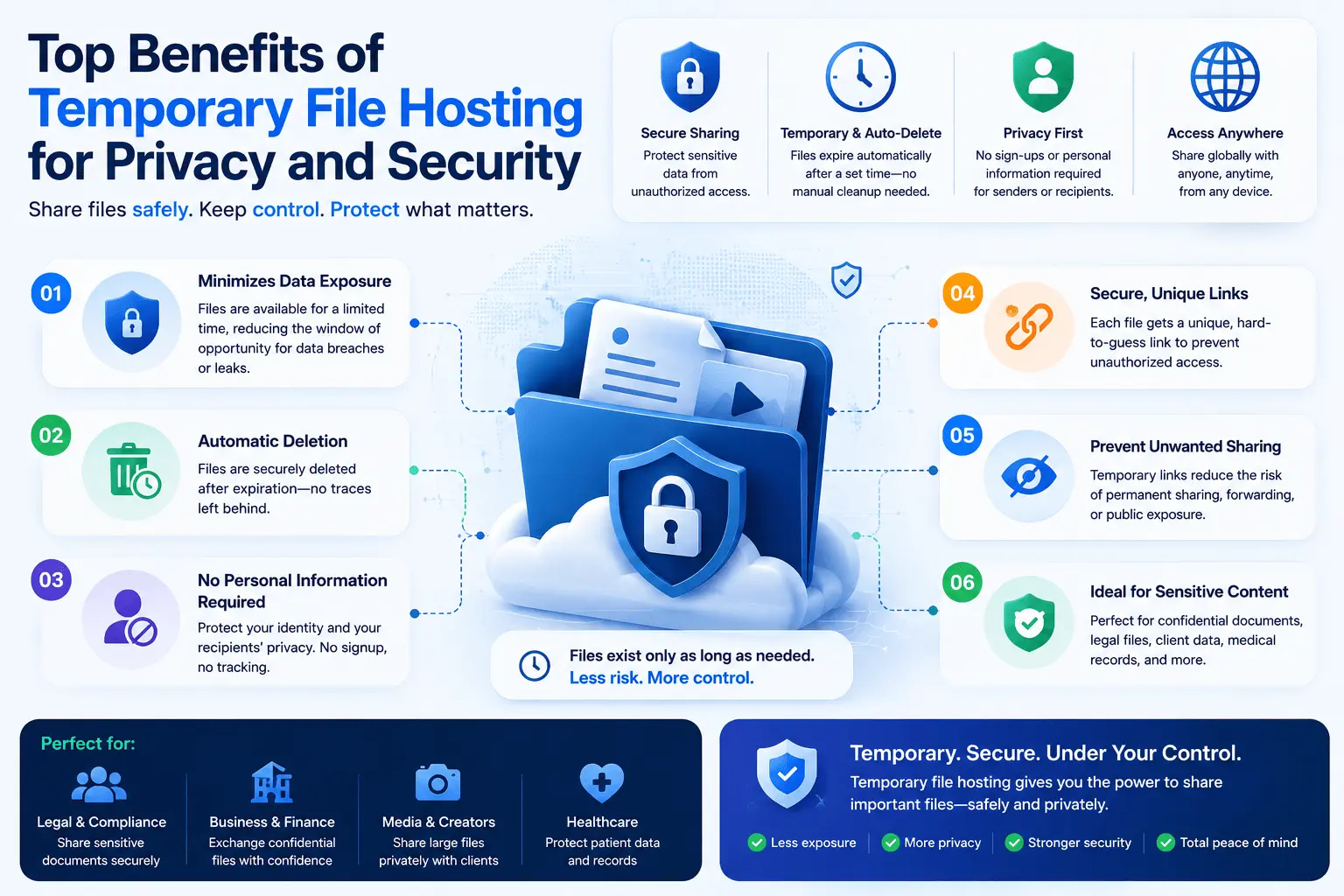
As online file sharing continues to grow in 2026, users are becoming more concerned about privacy, security, and data control.
Many people no longer want files stored permanently online, especially when sharing confidential documents, personal media, or temporary business files.
This growing demand has increased the popularity of temporary file hosting services that automatically remove files after a certain period of time.
By combining convenience with stronger privacy controls, temporary hosting platforms are becoming an important solution for secure digital communication.
Temporary file hosting allows users to upload files online for a limited period before they are automatically deleted.
Unlike traditional cloud storage systems that keep files indefinitely, temporary hosting focuses on short-term access and controlled sharing.
These platforms often include:
This approach helps reduce long-term data exposure while simplifying online sharing.
Digital privacy concerns continue increasing every year.
Users are becoming more aware of:
Because of this, many individuals and businesses now prefer private uploads that automatically expire after use.
Temporary hosting reduces the amount of sensitive data permanently stored online, helping improve overall security.
One of the biggest advantages of temporary hosting is the use of expiring download links.
Instead of leaving files accessible forever, users can control how long shared content remains available.
Benefits include:
This is especially useful for business contracts, internal reports, personal media, or client deliverables.
Permanent storage systems can sometimes create unnecessary security exposure.
The longer files remain online, the greater the potential risk of:
Using secure file hosting with automatic expiration helps minimize these risks.
Modern platforms often include:
These features help users maintain stronger control over shared content.
Temporary hosting platforms are also valued for their simplicity.
Users often need quick solutions for:
Instead of managing permanent cloud folders, users can create temporary upload links and share files instantly.
This improves convenience while reducing clutter.
As remote work continues growing, secure temporary sharing has become useful for distributed teams.
Businesses often need fast and private ways to exchange:
Using private file transfers allows teams to collaborate more securely without maintaining unnecessary long-term storage.
Several platforms provide temporary hosting and expiring file-sharing features.
Examples include:
These services focus on simplified sharing systems with automatic expiration functionality.
Temporary hosting solutions are expected to become even more advanced in the coming years.
Emerging trends include:
As users prioritize privacy and digital security, temporary sharing systems will likely continue gaining popularity.
The demand for temporary file hosting is increasing as users seek safer and more private ways to share files online.
Features like expiring download links, encrypted uploads, and automatic deletion help reduce long-term data exposure while simplifying file sharing.
Whether for personal privacy, remote collaboration, or business security, temporary hosting platforms provide a practical solution for modern digital workflows.
Using reliable secure file hosting systems can help users maintain better control over their online data in 2026 and beyond.
Temporary file hosting is a system where uploaded files are automatically deleted after a certain time period.
They help improve privacy and security by limiting how long files remain accessible online.
Many platforms use encrypted transfers, secure storage systems, and automatic deletion features to improve security.
Documents, presentations, videos, images, business reports, and confidential files are commonly shared through temporary hosting platforms.
Yes, because files are not stored permanently, reducing long-term exposure and unauthorized access risks.