Get Marketing Insights First
Subscribe to receive actionable strategies, growth tips, and industry insights delivered straight to your inbox.

In 2026, digital workflows depend heavily on speed, flexibility, and instant collaboration. Whether you’re working remotely, managing creative projects, or sharing business documents, the ability to send large files quickly has become essential.
Unfortunately, many users still struggle with slow uploads, file size limitations, and inefficient sharing systems that interrupt productivity.
Modern teams need smarter solutions for large file transfer without wasting time waiting for uploads to finish or dealing with failed transfers.
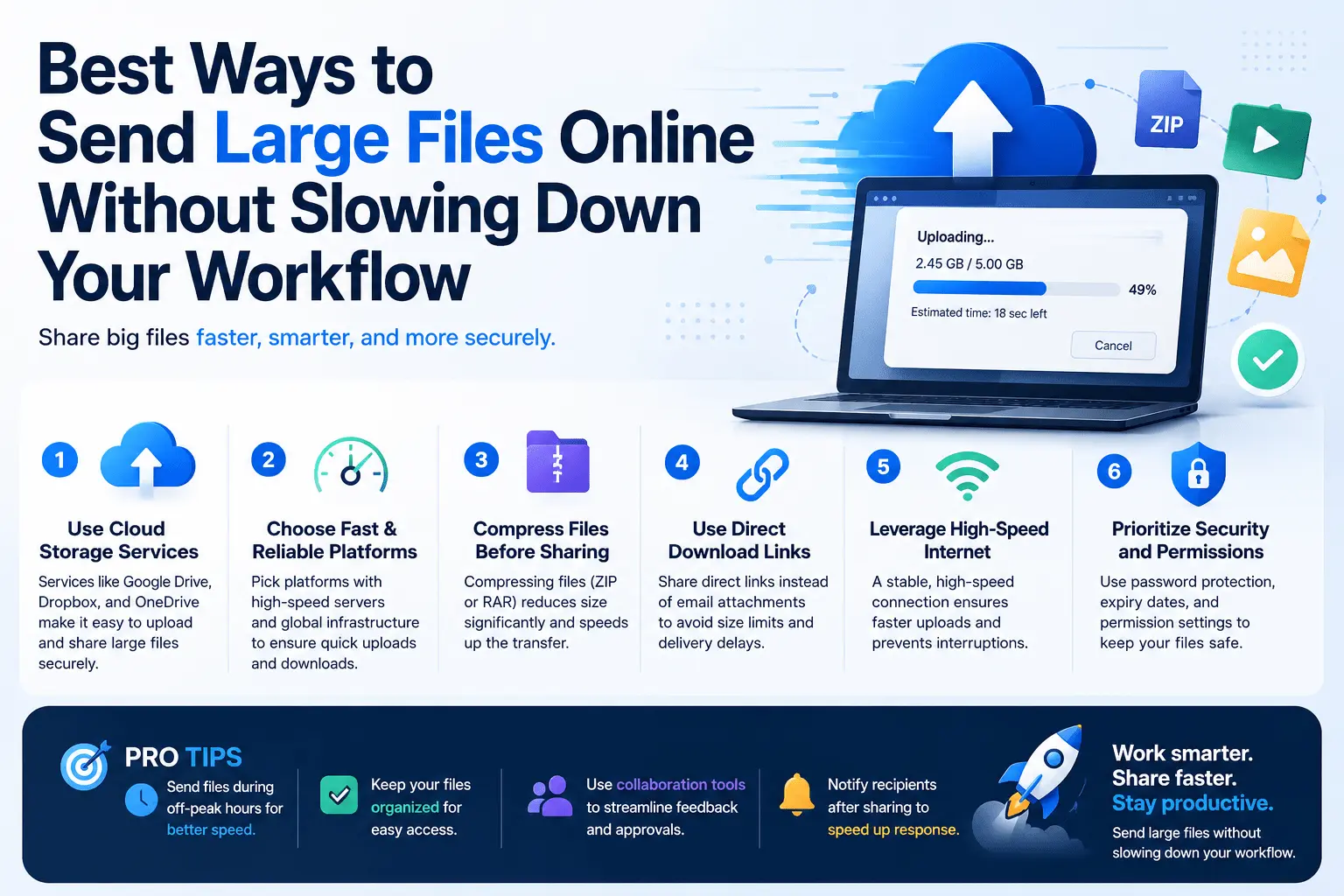
Here are the best ways to improve file sharing efficiency while keeping your workflow fast and organized.
Email attachments were never designed for modern file sizes.
High-resolution videos, design projects, software packages, and cloud backups can easily exceed traditional attachment limits.
Common problems include:
This is why more users are switching to cloud-based platforms designed specifically for uploading big files efficiently.
Cloud platforms have become the most reliable solution for sharing large files online.
Instead of attaching files directly to emails, users can upload content securely and generate shareable download links.
Benefits include:
Modern cloud services also allow users to share files online instantly without requiring complicated setup processes.
Not all upload tools perform equally.
Some platforms throttle speeds, limit transfer sizes, or struggle with large media uploads.
A good fast file upload tool should offer:
Fast upload systems can significantly improve collaboration for remote teams and digital creators.
Compressing files can reduce upload time and bandwidth usage.
Useful compression formats include:
Compression works especially well for:
While modern internet speeds continue improving, optimizing file size still helps maintain efficient workflows.
Poor file organization can slow teams down even more than upload speed issues.
When sending files online:
Efficient organization reduces confusion and helps teams locate files faster.
Security remains one of the most important aspects of online file transfers.
When using platforms for large file transfer, choose services that provide:
These features help protect sensitive files while maintaining smooth collaboration.
One of the biggest productivity killers is waiting for uploads to finish before continuing work.
Modern platforms now support:
These features allow users to send large files instantly while continuing other tasks.
Remote work is now a permanent part of many industries.
Teams need systems that simplify collaboration across multiple locations and devices.
The best tools for upload big files workflows usually support:
This helps maintain productivity without creating bottlenecks.
Several popular services continue to support efficient file transfers in 2026.
Examples include:
These platforms focus on simplified sharing experiences and flexible file delivery systems.
As internet infrastructure improves globally, file sharing platforms are evolving rapidly.
Emerging trends include:
The future of file sharing will prioritize both speed and seamless collaboration.
The ability to send large files efficiently is now essential for modern digital workflows.
Whether you’re sharing creative projects, business documents, or media assets, choosing the right platform can dramatically improve productivity.
Modern users expect:
Using a reliable fast file upload tool can help teams collaborate more efficiently while simplifying day-to-day operations.
If your workflow depends on large media or cloud collaboration, investing in better upload systems is becoming increasingly important in 2026.
Cloud-based file-sharing platforms are currently the most efficient and reliable solution for large file transfers.
Slow platforms, unstable connections, and poor file organization can create delays that interrupt productivity.
Use optimized upload platforms, compress files when possible, and ensure you have a stable internet connection.
Many modern platforms offer encryption, password protection, and temporary sharing links to improve security.
Videos, project archives, design files, documents, presentations, and software packages are among the most common large file types shared online.